Joint pain has a way of creeping into everyday life. A knee that catches on the stairs, a shoulder that aches when you reach overhead, a swelling that never quite settles. When physical exams and scans don’t give the full picture, arthroscopy often becomes the tool that finally answers the question. It lets an orthopedic surgeon look directly inside a joint through a tiny incision, and in many cases treat the problem in the same sitting. For patients in Kothrud, Bavdhan and nearby parts of Pune, it has become one of the most reliable ways to reach an accurate diagnosis without a large open surgery.
What Is Arthroscopy?
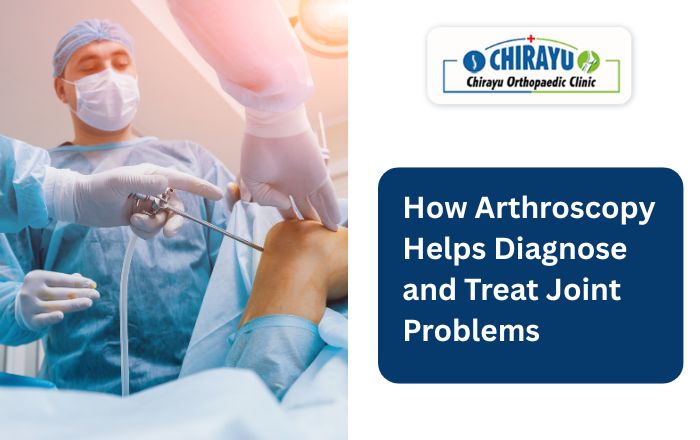
Arthroscopy is a minimally invasive procedure in which a surgeon inserts a thin instrument called an arthroscope through a small keyhole incision. The arthroscope carries a tiny camera and light that send a clear, magnified view of the joint onto a screen. Through one or two more small openings, fine surgical tools can be passed in to repair the damage. Because the cuts are small, there’s less tissue disruption and usually a quicker recovery than with traditional open surgery.
How Does Arthroscopy Help Diagnose Joint Problems?
X-rays show bone well but reveal little about soft tissue. MRI scans help, yet they can miss subtle tears or return unclear results. Arthroscopy removes much of the guesswork, because the surgeon sees the cartilage, ligaments and joint lining in real time, exactly as they are.
This direct view is especially useful when symptoms don’t match the scans, when pain continues despite treatment, or when a joint keeps locking, catching or giving way. Problems such as cartilage damage, early arthritis and small ligament tears are often confirmed this way, which then guides the right treatment plan.
How Does Arthroscopy Treat Joint Problems?
The real advantage is that diagnosis and treatment can happen together. Once the surgeon identifies the issue, many repairs are carried out through the same small incisions during the same procedure. That means fewer hospital visits and a smoother path back to normal movement.
Common Conditions Treated With Arthroscopy
- Torn meniscus in the knee
- ACL reconstruction after sports or road injuries
- Removal of loose cartilage or bone fragments
- Repair of a torn rotator cuff in the shoulder
- Treatment of frozen shoulder and shoulder impingement
- Cleaning out inflamed joint lining in early arthritis
Which Joints Can Be Treated?
Arthroscopy is most common in the knee and shoulder, but it also works well for the ankle, hip, wrist and elbow. The knee remains the joint most people link with the procedure, largely because meniscus and ligament injuries happen so often, whether from sport, an accident or simple wear over the years.
What Are the Benefits of Arthroscopic Surgery?
Patients usually choose arthroscopy for very practical reasons:
- Smaller incisions and minimal scarring
- Less pain after surgery
- Lower risk of infection
- Shorter hospital stay, often as a day-care procedure
- Faster return to work and daily activities
Many people go home the same day and begin gentle movement within a week. Full recovery still depends on the joint involved and the type of repair, so your surgeon will set realistic timelines for your case.
Arthroscopy With an Orthopedic Surgeon in Kothrud, Pune
Choosing the right surgeon matters as much as the procedure itself. Dr. Vinil Shinde is an orthopedic surgeon in Kothrud and Bavdhan, Pune, with 20+ years of experience treating joint injuries and degenerative conditions.
Consult Dr. Vinil Shinde – Orthopedic Surgeon
Phone: 9022338899
Visit: https://drvinilshinde.com/
Frequently Asked Questions (FAQs)
1. Is arthroscopy a major surgery?
No. It’s minimally invasive and often done as a day-care procedure, so most patients go home the same day.
2. How long does recovery take?
Simple procedures may need only a few days to a couple of weeks. Ligament reconstructions can take a few months of guided rehab.
3. Is arthroscopic surgery painful?
There’s usually mild soreness for a few days, which is easily controlled with medication and rest.
4. Will I need general anaesthesia?
It depends on the joint and the repair. Some cases use regional anaesthesia, while others need general anaesthesia. Your surgeon will decide what’s safest.